
Originally published on September 17, 2026 | Last updated on September 17, 2026
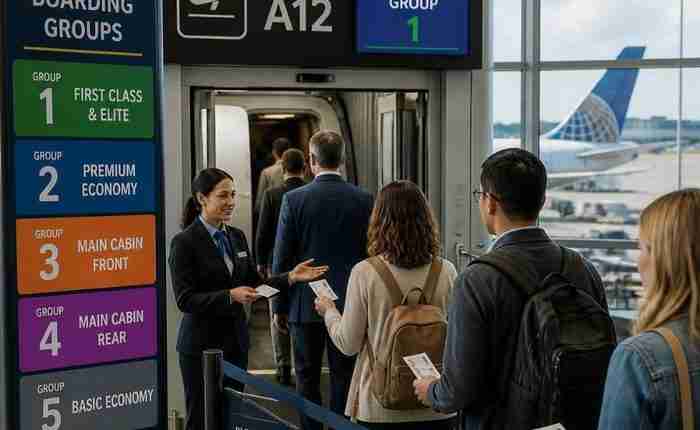
How Do Airline Boarding Groups Work? It may seem straightforward, but the system is a carefully engineered part of the airline experience. From seat location and loyalty status to cabin class and carry-on capacity, several factors determine when you board.
If you have ever waited at an airport gate while passengers are called by “Group 2,” “Zone 5,” or “Group C,” you may have wondered what those numbers actually mean.
Airline boarding groups can look arbitrary, but they are part of a carefully designed operational system. Airlines use them to control the flow of passengers into a confined aircraft cabin while also accommodating premium customers, loyalty-program members, passengers requiring assistance, families, seat locations and commercial priority products.
The crucial point is that there is no universal airline boarding-group system. Each carrier designs its own sequence, and those systems can change over time.
So what determines your boarding group, and does boarding earlier actually make a difference?
What Is an Airline Boarding Group?
A boarding group is a collection of passengers whom an airline asks to approach the aircraft during a particular stage of the boarding process.
Recent academic research defines a boarding group essentially as passengers who are called at the gate at the same time. The researchers also distinguish boarding groups from booking classes: a fare class describes the commercial product purchased, whereas a boarding group determines when a passenger is invited to board.
This distinction is important because two passengers traveling in economy can have completely different boarding priorities.
For example, one might have elite frequent-flyer status or a qualifying priority benefit, while the other holds a basic economy ticket.
Your boarding pass is therefore the most reliable source of information about your boarding position. For a useful explanation of common aviation terminology, including boarding-pass terminology, see this guide to travel terms and phrases.
Why Do Airlines Use Boarding Groups?

An aircraft cabin is not simply a large room in which passengers can move freely.
Passengers enter through a narrow door, walk along a relatively narrow aisle, locate their rows and seats, and frequently stop to put carry-on luggage into overhead compartments.
That creates potential congestion.
Imagine a passenger in row 28 stopping in the aisle while trying to lift a suitcase into an overhead bin. Everyone behind that passenger may have to wait, even if their seats are farther toward the rear.
Research published by Springer Nature describes these interactions as part of the complexity of the boarding process. Boarding includes passengers walking through the aircraft, stowing carry-on baggage and taking their seats, and it can be a critical component of an aircraft’s turnaround time.
This is why boarding is an operational problem rather than simply a matter of forming an orderly queue.
Airlines are trying to move a large number of people through a restricted physical space while minimizing congestion and keeping the departure process on schedule.
What Determines Your Boarding Group?
There is no single formula, but airlines commonly consider several factors.
1. Accessibility and special assistance
Passengers who need additional time or assistance may receive preboarding or early boarding.
Southwest Airlines, for example, identifies passengers with disabilities who need additional time or assistance as eligible for preboarding. American Airlines similarly allows customers needing special assistance to request early boarding at the gate.
This should not be confused with a commercial priority-boarding product. Accessibility-related boarding exists to accommodate passenger needs.
2. Premium cabins
First- and business-class passengers commonly board before most economy passengers.
American Airlines currently places First and Business customers in its early boarding sequence, ahead of its numbered Main Cabin groups.
This is one reason understanding the difference between cabin class and boarding group matters.
For travelers interested in the broader premium-flight experience, Digital Travel Expert’s guide to luxury international flights and premium-cabin travel covers cabin differences, seat selection and priority-related benefits.
3. Frequent-flyer status
Airline loyalty programs are another major source of boarding priority.
American, for example, currently places different AAdvantage elite tiers into Groups 1 through 4, after its highest-priority customers, First and Business passengers, and certain family boarding.
Priority boarding therefore serves both an operational function and a loyalty-program function.
4. Seat location
Some airlines incorporate the location of your assigned seat into the boarding sequence.
Alaska Airlines, for example, currently separates portions of its Main Cabin boarding by seat location, with passengers seated toward the back assigned to earlier groups than some passengers in the front portion of Main Cabin.
The logic is relatively intuitive: passengers seated toward the rear can theoretically walk toward their seats without passing as many already-seated passengers.
Seat selection can therefore have implications beyond comfort. The Digital Travel Expert’s discussion of smart seat selection provides additional context on why seat location and cabin layout matter.
Boarding Groups Are Not the Same as Fare Classes
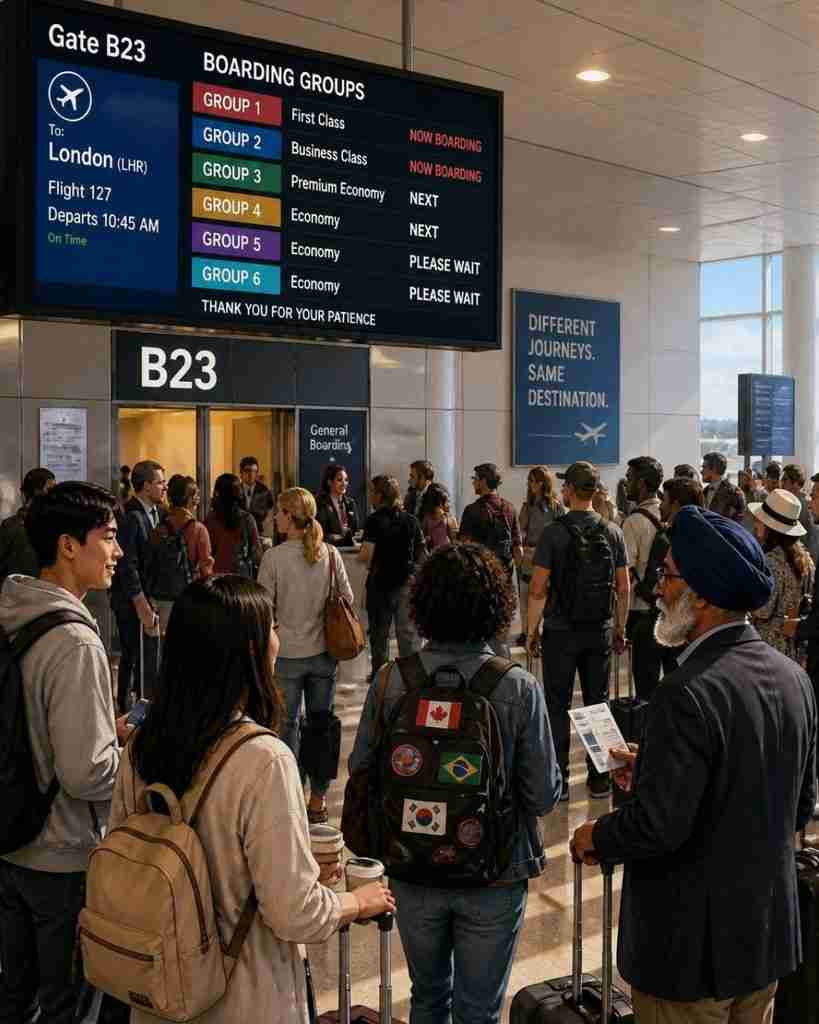
One of the most common misconceptions is that a boarding group is simply another name for a ticket class.
It isn’t.
A fare determines the commercial conditions attached to a ticket. Those conditions can include baggage allowances, change rules, refunds, seat-selection options and other benefits.
A boarding group, by contrast, determines when the airline asks you to board.
The distinction is explicitly recognized in recent boarding research, which notes that boarding groups are not equivalent to booking classes.
This is why an economy passenger may board before another economy passenger, while a premium passenger may have an entirely different priority.
Why Some Airlines Board From the Back
From an operational perspective, one obvious strategy is to board passengers sitting toward the rear before those sitting toward the front.
That potentially reduces the number of people walking past already seated passengers.
But boarding is not governed by efficiency alone.
Airlines also have commercial objectives. Earlier boarding can be a benefit attached to:
- Premium cabins
- Elite status
- Preferred seats
- Higher fare products
- Airline credit cards
- Purchased priority services
Southwest’s current system illustrates how many variables can be combined. Customers are assigned Groups 1 through 8, with boarding determined by factors including fare, loyalty or credit-card status, seat type and cabin location.
Consequently, an airline may deliberately choose a system that balances operational considerations with the benefits it promises customers.
The Southwest Example: Boarding Systems Can Change
Southwest is a particularly useful example because its boarding system changed substantially when the airline moved to assigned seating.
The airline now assigns boarding Groups 1 through 8. Its current rules take into account fare, tier and qualifying credit-card status, seat type and location in the cabin. Passengers on the same reservation generally receive the same boarding group, subject to the airline’s stated exceptions.
This illustrates a broader lesson: boarding groups are not permanent features of aviation.
Airlines can redesign them when their seating model, commercial products or operational strategy changes.
Travelers who remember how an airline boarded passengers several years ago should therefore check the current rules rather than relying on an old boarding experience.
For a broader look at how technology and changing passenger expectations are reshaping travel, The Digital Travel Expert’s coverage of modern travel trends and technology provides useful context.
Why Boarding Early Can Matter
For passengers traveling with only a small personal item, boarding position may have limited practical significance.
For travelers carrying a larger cabin bag, however, timing can matter because overhead-bin capacity is finite.
The boarding process therefore has a direct relationship with carry-on luggage. American Airlines has specifically connected its boarding-process changes with better management of overhead-bin space and fewer carry-on bags requiring gate checking.
This helps explain why airlines can successfully market priority boarding as a benefit.
Priority boarding does not create additional overhead-bin capacity. Instead, it changes when you enter the cabin relative to other passengers.
If the overhead compartments fill up, passengers boarding later may have fewer convenient storage options.
What Happens When Your Boarding Pass Is Scanned?
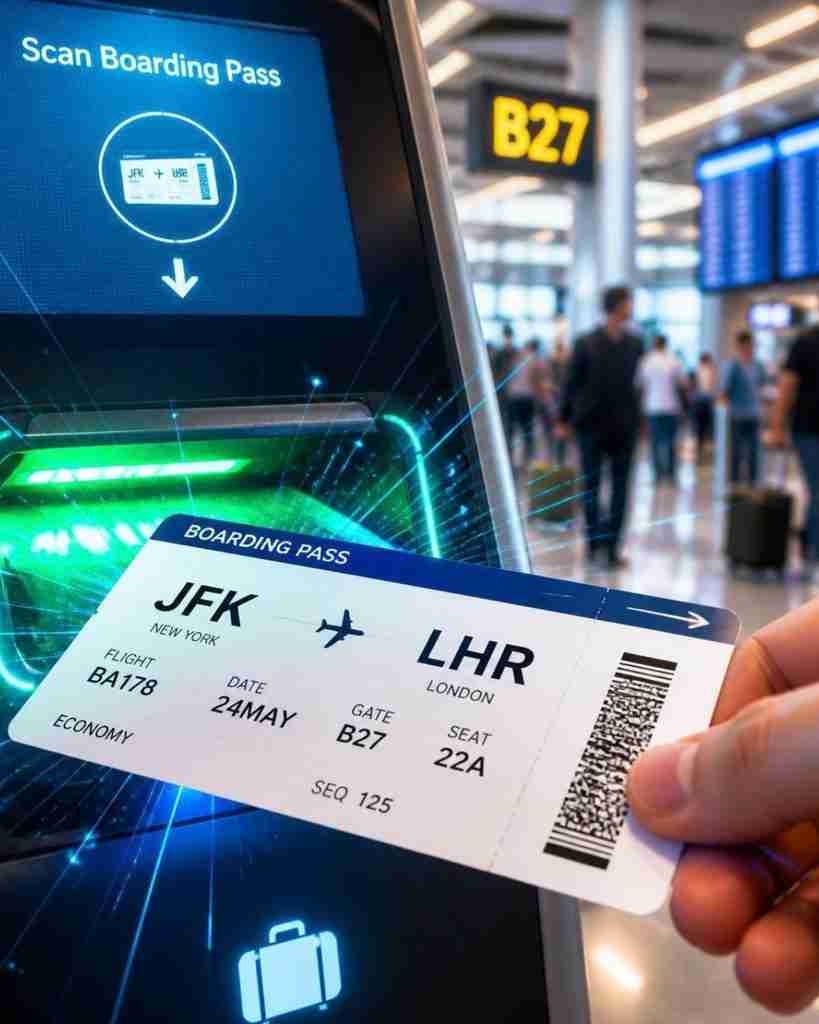
Boarding is also an important part of the airline’s operational recordkeeping.
When your boarding pass is scanned at the gate, the airline isn’t merely checking that you have a valid ticket.
Departure-control systems are involved in recording passenger movements and supporting passenger and baggage reconciliation. IATA documentation describes processes in which boarding information is recorded through boarding passes or ticket/seat data and reconciled with baggage information.
Modern airport technology is making this process increasingly digital.
Digital Travel Credentials, for example, are being explored as a way to streamline identity verification and passenger processing. Digital Travel Expert’s current guide to Digital Travel Credentials explains how mobile credentials, biometric verification and automated airport processes may influence the passenger journey.
Why Airlines Keep Experimenting With Boarding
There is no universally perfect boarding strategy.
Researchers have studied approaches including:
- Back-to-front boarding
- Window-middle-aisle boarding
- Reverse-pyramid approaches
- Random boarding
- Seat-location-based groups
Recent research examining boarding-group allocation found that the effectiveness of different strategies depends on factors including passenger walking speed and aircraft configuration.
That qualification is important.
A strategy that performs well under one set of assumptions may behave differently in an actual airport, where passengers travel in families, carry different amounts of luggage, stop in aisles and do not necessarily follow the theoretically optimal sequence.
Airlines therefore need systems that are not only mathematically efficient but also understandable to passengers and manageable by gate agents.
How to Use Your Boarding Group Correctly
The simplest approach is to follow the boarding instructions printed on your boarding pass and displayed at the gate.
Airlines increasingly use gate screens to show which groups are currently boarding. Alaska Airlines, for example, displays boarding progress on screens at many gates.
Don’t assume that a Group 3 on one airline has the same meaning as Group 3 on another.
The number is meaningful only within that airline’s particular boarding system.
Also remember that boarding deadlines matter. American Airlines currently says most flights begin boarding 30–50 minutes before scheduled departure, depending on the aircraft and destination, with boarding ending 15 minutes before departure.
The Bottom Line: How Do Airline Boarding Groups Work?
Airline boarding groups are essentially a traffic-management system for the aircraft cabin.
Your group can reflect a combination of:
- Accessibility requirements
- Cabin class
- Frequent-flyer status
- Fare type
- Seat type
- Seat location
- Credit-card or priority benefits
- Family or special boarding rules
The exact hierarchy varies between airlines.
More importantly, boarding groups are not simply about deciding who gets onto the aircraft first. They connect passenger experience with aircraft operations, cabin congestion, overhead-bin capacity, loyalty programs, premium products and the airline’s broader turnaround process.
The next time a gate agent calls “Group 4,” therefore, don’t think of it as an arbitrary number.
It is the airline’s way of turning several hundred individual passengers into a controlled sequence—one designed to balance the physical realities of an aircraft cabin with the commercial and operational realities of modern air travel.
In short: your boarding group tells the airline when it wants you to enter the aircraft. It does not necessarily tell you how valuable your ticket is, where you will sit, or how quickly the aircraft will depart. Those are separate parts of a much larger system.
🤍 A Little Creator Recommendation
If you love creating travel content like I do, you'll enjoy Travelpayouts. It's free to join, easy to use, and a lovely way to earn from sharing the adventures you already inspire.
✈️ Join Travelpayouts♡ This is an affiliate link, which means I may earn a small commission at no extra cost to you. Thank you for supporting my journey!
Feature Your Travel Brand
Next to premium hotels, cruise lines, and tour operators, through editorial stories.
Categories: Destinations & Journeys • Culinary Travel • Culture & Heritage • Stays & Hospitality • Lifestyle & Fashion
Accepted based on editorial fit & availability.
