
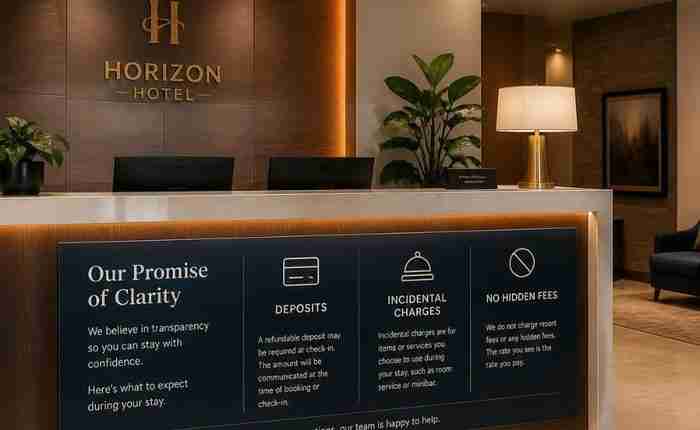
Originally published on September 15, 2026 | Last updated on September 15, 2026
Hotel Incidentals: What They Are & How to Avoid Surprises. You booked the room, but did you budget for the unexpected? Hotel incidentals can turn a great stay into a surprise bill. From security deposits and card holds to minibar and parking fees, here’s what travelers need to know before checking in.
You arrive at your hotel after a long flight, check in, drop your bags, and finally relax.
Everything seems fine.
Until you check your bank account.
Suddenly, there’s an extra charge—or a large amount of money temporarily unavailable on your card.
You start wondering:
What exactly are hotel incidentals? Why did the hotel charge me? And can I get the money back?
If you’ve ever been confused by an incidental deposit, minibar charge, resort fee, parking fee, or unexpected hotel bill, you’re not alone.
Hotel incidentals are one of those travel topics that most people don’t think about until they’re standing at the front desk with a suitcase in one hand and a payment card in the other.
And here’s the uncomfortable truth:
The price you see when you search for a hotel isn’t always the amount you’ll ultimately spend.
Understanding the difference between your room rate, mandatory hotel fees, optional extras, and temporary incidental holds can save you money—and a lot of frustration.
What Are Hotel Incidentals?

Hotel incidentals are additional charges or potential charges associated with your stay that are separate from the basic room rate.
Common examples include:
- Minibar purchases
- Room service
- Restaurant and bar charges
- Spa treatments
- Laundry
- Parking
- In-room entertainment
- Telephone calls
- Late checkout
- Extra guests
- Damage or missing-item charges
- Certain hotel services
Some of these are completely optional.
Others can result from something unexpected, such as damage to the room.
Then there’s another category that often causes confusion: the incidental hold.
What Is a Hotel Incidental Hold?
An incidental hold is generally a temporary authorization placed on your payment card by the hotel.
Let’s say your room costs $150 per night.
At check-in, the hotel might authorize an additional $100 or $200 as security for potential incidental expenses.
That doesn’t necessarily mean you’ve spent the money.
Instead, the hotel is essentially reserving access to those funds or credit in case you charge something to the room.
The Consumer Financial Protection Bureau even uses a hotel authorization hold as an example of how a hotel can temporarily authorize an amount on a credit card before the final transaction is processed.
But here’s the question many travelers forget to ask:
How much is the incidental hold, and when will it be released?
Ask before handing over your card.
Is a Hotel Incidental Deposit a Real Charge?
This is where terminology matters.
A temporary authorization isn’t necessarily the same thing as a completed charge.
However, that doesn’t mean you won’t notice it.
If you use a debit card, for example, an authorization may affect the amount of money you can access while traveling.
Imagine you have €800 available for a two-week trip.
Your hotel places a €200 incidental hold.
You haven’t necessarily spent €200—but you may suddenly have only €600 available to use.
For travelers operating with a tight budget, that can be a serious inconvenience.
Debit-card users should pay particular attention to incidental policies.
Ask the hotel:
“Is this a charge or a temporary authorization?”
Then ask:
“When should the authorization be released after checkout?”
Don’t assume it will happen instantly.
Hotel Incidentals vs. Hidden Hotel Fees
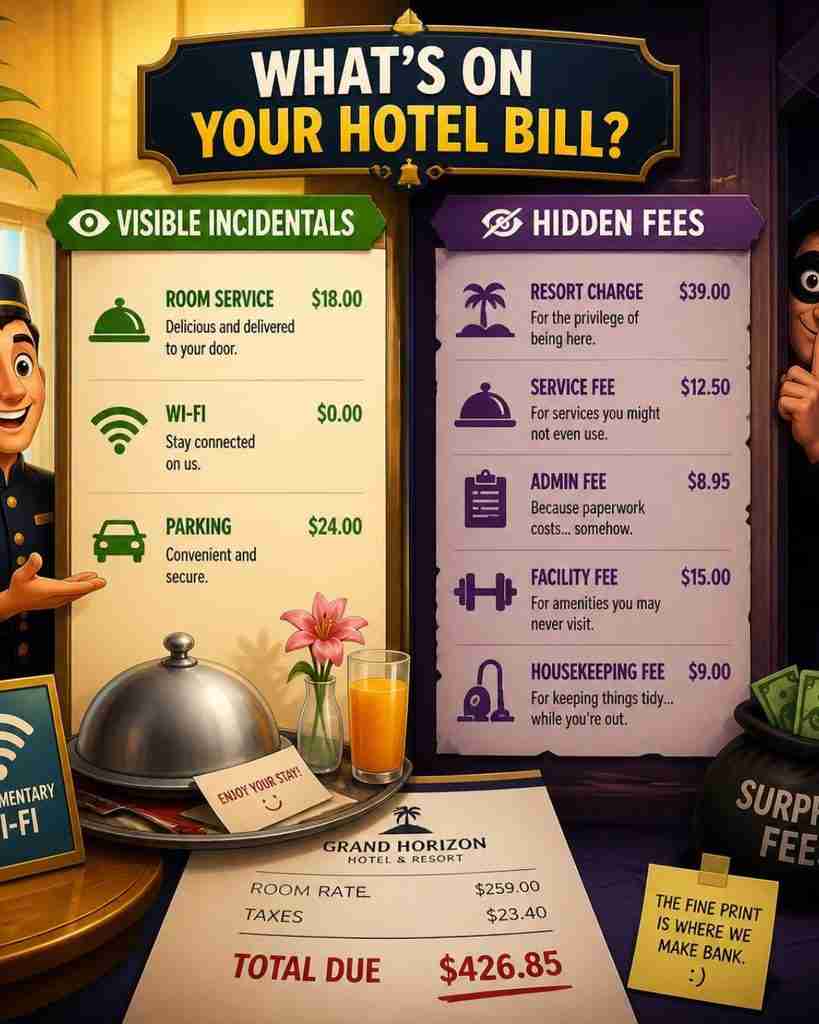
These terms are often mixed together, but they aren’t exactly the same thing.
An incidental is generally connected to something you use, purchase, or potentially owe during your stay.
A mandatory resort fee is different.
For example:
Minibar: Usually optional → incidental.
Room service: Optional → incidental.
Spa treatment: Optional → incidental.
Mandatory resort fee: Required → not an optional incidental.
This distinction has become particularly important because regulators have focused heavily on price transparency in hotels and short-term lodging.
The U.S. Federal Trade Commission’s current rule requires covered businesses advertising short-term lodging to disclose the total price upfront, including mandatory fees. Optional services can generally be excluded until selected, while certain charges that cannot be known in advance may be treated differently.
So, if you’re comparing hotels, don’t simply compare the headline nightly rate.
Compare the real cost of the stay.
Why Hotel Prices Can Feel Misleading
Here’s a scenario most travelers understand.
Hotel A:
€100 per night
Hotel B:
€115 per night
At first glance, Hotel A looks cheaper.
But then you discover Hotel A has:
- €25 mandatory resort fee
- €15 parking
- €10 breakfast
- Additional local taxes
Hotel B includes parking and breakfast.
Suddenly, the cheaper hotel isn’t necessarily cheaper.
This is exactly why fee transparency matters.
The FTC has previously found that separating mandatory resort fees from room rates can make it harder for consumers to compare accommodation prices and increase the effort required to find the real cost. (Federal Trade Commission)
In other words:
A low advertised price doesn’t always mean a low final price.
The Hotel Incidentals Travelers Most Often Forget
1. Minibar Charges
Minibars are classic troublemakers.
Some hotels use automated minibar systems that can detect when an item is removed.
If you’re simply checking whether a bottle is yours to consume, don’t assume moving it won’t trigger a charge.
When in doubt, ask.
2. Parking
Parking can quickly turn a seemingly affordable hotel into an expensive stay.
Always check whether parking is:
- Free
- Charged per night
- Charged per day
- Valet only
- Subject to availability
And don’t forget to ask whether parking taxes or additional fees apply.
3. Late Checkout
A few extra hours in your room may feel harmless.
But late checkout can come with a fee.
If your flight leaves at 9 p.m., ask the front desk whether you can keep the room longer—and whether there is a charge.
4. Room Service
Room service isn’t simply the menu price.
There may be:
- Delivery charges
- Service charges
- Taxes
- Minimum orders
Check the final price before ordering.
5. Damages
Hotels can charge guests for genuine damage or missing property.
That’s why it’s smart to report existing damage when you arrive.
If you notice a broken lamp, stained carpet, damaged furniture, or anything unusual, tell reception immediately.
A quick report can prevent a frustrating dispute later.
How to Avoid Hotel Incidental Charges
The easiest way to avoid surprises is to ask questions before you check in.
Check the Hotel’s Policies Before Booking
Don’t just look at photographs and star ratings.
Read the sections covering:
- Additional fees
- Deposits
- Payment policies
- Parking
- Breakfast
- Cancellation
- Pets
- Extra guests
- Resort fees
- Security deposits
- Incidental authorizations
And remember: travel planning is increasingly becoming about comparing the entire experience, not simply finding the lowest room price.
That connects with the broader shift toward smarter hotel discovery discussed in Google Tests AI Hotel Booking as Travel Industry Enters a New Bold AI Era, where the booking process is increasingly moving toward AI-assisted comparison and decision-making.
Ask for the Total Price
One of the best questions you can ask is:
“What will I actually pay for this stay, including mandatory fees and taxes?”
If the answer isn’t clear, ask again.
You aren’t being difficult.
You’re being a smart traveler.
Ask About the Deposit
Before check-in, ask:
“How much is the incidental authorization?”
Then:
“How long does it normally take to be released after checkout?”
This is especially important if you’re using a debit card.
Take a Photo of the Room
This takes seconds.
When you enter the room, quickly photograph anything that looks damaged.
You don’t need to turn your hotel room into a crime scene.
Just document obvious issues.
It can be useful evidence if a disagreement arises later.
Review Your Bill Before Leaving
Don’t rush through checkout.
Ask for an itemized bill.
Check:
- Room nights
- Restaurant charges
- Minibar
- Parking
- Room service
- Spa
- Laundry
- Taxes
- Other fees
If you don’t recognize something, ask immediately.
It’s much easier to resolve a questionable charge while you’re still standing at the hotel than weeks later.
What If a Hotel Charges You for Something You Didn’t Use?
First, stay calm.
Ask for the details of the charge.
You can say:
“I don’t recognize this charge. Could you please check the record for me?”
Maybe someone entered the wrong room number.
Maybe a minibar item was recorded incorrectly.
Maybe you forgot about a restaurant purchase.
Or perhaps the charge really is incorrect.
Give the hotel an opportunity to investigate.
If the problem isn’t resolved, keep your receipts, emails, booking confirmation, and itemized bill.
Documentation matters.
What Hotels Can Learn From Incidental Charges
There is another side to this story.
Hotel incidentals aren’t only a traveler problem.
They’re also a hospitality brand problem.
A guest who feels surprised by a fee may leave with a negative impression—even if the fee itself was technically legitimate.
This is where transparency becomes part of the guest experience.
Hotels that explain fees clearly can reduce confusion and build trust.
For hotel marketers, this connects directly with the principles discussed in The 4 Pillars of Boutique Hotel Content That Wins Bookings, which emphasizes creating hotel content around what travelers actually want to know rather than relying only on attractive imagery.
And transparency shouldn’t stop at the booking page.
It should appear throughout the guest journey.
Could Better Hotel Content Prevent These Problems?
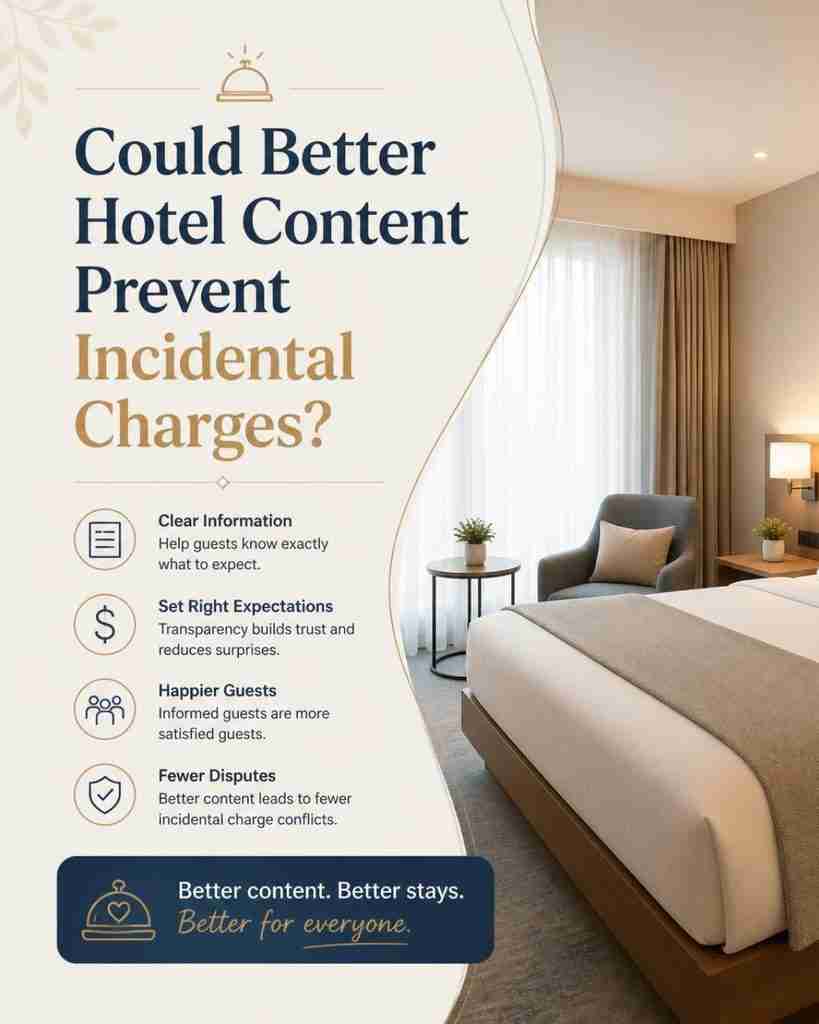
Absolutely.
Imagine a hotel website that clearly says:
Room rate: €120/night
Mandatory fees: €15/night
Taxes: €20
Incidental authorization: €100 temporary hold
Parking: €20/night, optional
Now compare that with a website that simply says:
Rooms from €120
Which one makes you feel more confident?
The first one.
And confidence is valuable in travel.
Hotel brands competing for direct bookings should think about content as part of the guest experience—not just an SEO exercise. The Digital Travel Expert’s guide on Effective SEO for Hotels: 15 SEO Tips to Win Direct Bookings explores how hotels can use useful, strategically structured content to attract and convert travelers.
10 Questions to Ask Before Checking Into a Hotel
Save this list for your next trip:
- What is the total price of my stay?
- Are there mandatory resort or destination fees?
- How much is the incidental deposit or authorization?
- Is the incidental amount a charge or a temporary hold?
- When will the hold be released?
- Is parking included?
- Is breakfast included?
- Are there charges for late checkout?
- How does the minibar work?
- Can I get an itemized bill at checkout?
These questions could save you more money than another hour spent searching for a slightly cheaper hotel room.
The Bigger Truth About Hotel Incidentals
Hotel incidentals aren’t automatically unfair.
Hotels need protection against legitimate expenses, unpaid services, and property damage.
The problem begins when travelers don’t understand what they’re agreeing to.
And that’s why hotel price transparency matters.
As the travel industry becomes increasingly digital—and AI starts helping travelers compare and book hotels—the expectation for clear information is only going to grow. The Digital Travel Expert’s recent coverage of AI in hotel booking and agentic AI travel shows how quickly the booking journey is changing.
The traveler of the future won’t simply ask:
“What’s the cheapest hotel?”
They’ll ask:
“What’s the real cost, what am I getting, and can I trust this recommendation?”
That’s a much better question.
Final Takeaway on Hotel Incidents: Know Before You Go
Hotel incidentals don’t have to ruin your trip.
The key is understanding the difference between your room rate, mandatory fees, optional purchases, and temporary card holds.
Before booking, read the fee information.
Before checking in, ask about the incidental authorization.
During your stay, keep receipts and report damage.
Before leaving, check your itemized bill.
And most importantly, never be afraid to ask:
“Is this included, or will I be charged extra?”
It’s a simple question.
But when it comes to hotel stays, it can make the difference between a pleasant surprise and a very unpleasant one.
Because the best hotel deal isn’t necessarily the room with the lowest advertised price.
It’s the one where you know exactly what you’re paying for.
🤍 A Little Creator Recommendation
If you love creating travel content like I do, you'll enjoy Travelpayouts. It's free to join, easy to use, and a lovely way to earn from sharing the adventures you already inspire.
♡ This is an affiliate link, which means I may earn a small commission at no extra cost to you. Thank you for supporting my journey!
Feature Your Travel Brand
Next to premium hotels, cruise lines, and tour operators, through editorial stories.
Apply for FeatureCategories: Destinations & Journeys • Culinary Travel • Culture & Heritage • Stays & Hospitality • Lifestyle & Fashion
Accepted based on editorial fit & availability.
