

Originally published on September 11, 2026 | Last updated on September 11, 2026
Discover Hidden Travel Facts Every Explorer Needs to Know About the World—with practical insights on borders, visas, customs, safety, transport, geography, and local rules. Learn the lesser-known facts that help you prepare better, avoid costly mistakes, and travel with greater confidence.
The obvious travel advice is easy to find. The interesting stuff is buried in border rules, customs codes, transport regulations, geography, health guidance, and the tiny differences between countries.fun
Below is a 130-fact field guide, deliberately mixing practical facts with strange geographic and historical details. For rules that can change, I have favored official government, EU, WHO, CDC, IATA and similar sources.
Important: Entry, visa, health, customs and transport rules can depend on your nationality, route and exact itinerary. Treat this as a research guide rather than a substitute for checking the authorities for your specific trip.
I. Borders, visas and entry — the rules people discover too late
1. A visa-free destination does not automatically mean visa-free transit. Your connecting airport can create a separate immigration requirement.
2. “Transit” is not a single legal category. Staying airside can have completely different rules from passing through immigration.
3. Airlines can refuse boarding before you ever reach immigration if their document-checking system says your paperwork is insufficient; IATA’s Travel Centre is built around the same sort of travel-document data airlines use.
4. The EU’s Entry/Exit System (EES) became fully operational at all external Schengen border crossing points on April 10, 2026.
5. EES records covered non-EU short-stay travelers’ travel-document information, entry/exit data and biometrics, including facial images and fingerprints.
6. EU citizens and citizens of Iceland, Liechtenstein, Norway and Switzerland are not registered in EES as ordinary short-stay third-country visitors.
7. EES is not the same thing as ETIAS. They are two different EU systems.
8. As of September 2026, the EU says ETIAS is scheduled to begin in the last quarter of 2026, with the precise start date still to be announced.
9. A travel authorization generally means you may travel to the border; it is not necessarily an unconditional promise that you will be admitted. The UK’s ETA guidance explicitly says an ETA does not guarantee entry.
10. Passport-validity rules are not universal. A destination may require three months, six months, or another period beyond the trip.
11. Some countries also require blank passport pages; passport validity and page requirements can be separate conditions.
12. A passport can remain legally valid while still being unusable for a particular journey because the destination requires more remaining validity.
13. Dual nationals can face obligations from both countries whose nationality they hold.
14. Some countries expect their own nationals to enter and leave using that country’s passport. The United States explicitly requires U.S. citizens to use a U.S. passport to enter and leave the United States.
15. Dual nationality can affect consular protection: a country may treat you primarily as its own citizen while you are on its territory.
16. Some countries impose exit restrictions on their own nationals, meaning the important question may be not only “Can I enter?” but also “Can I leave?”
17. A traveler can unknowingly possess a second nationality through ancestry or place of birth even without having obtained that country’s passport.
18. Children traveling without one or both parents can sometimes require extra consent or custody documentation.
19. A route passing through a third country can trigger requirements that would not apply on a direct flight.
20. A country can change border controls temporarily even when it is part of Schengen.
As of September 2026, the European Commission lists multiple temporary internal Schengen controls, demonstrating that “Schengen = no borders” is an oversimplification.
II. Customs: the invisible border after immigration
21. Entering a country legally does not mean everything in your suitcase is legal.
22. Customs rules can apply to things that feel completely ordinary: food, plants, medicines, wildlife products, precious metals and cash.
23. When entering or leaving the EU with €10,000 or more in defined cash or equivalent monetary instruments, you must declare it.
24. Under EU cash-control rules, “cash” can include banknotes and coins, bearer negotiable instruments, certain gold coins and certain gold bullion—not merely wallet currency.
25. The EU €10,000 threshold applies individually to travelers in a group.
26. EU customs authorities can act on amounts below €10,000 when there are indications of links to criminal activity.
27. There are no single EU-wide rules governing every movement of cash between EU countries; individual national controls can exist.
28. Traveling from one EU country to another through a non-EU country can expose you to that intermediary country’s customs rules.
29. EU guidance specifically warns that traveling between EU countries via Switzerland can trigger Swiss customs formalities for certain quantities of alcohol and tobacco.
30. In the EU, large quantities of alcohol do not automatically become illegal simply because they are large; customs may examine whether they appear intended for personal use or resale.
31. EU guideline values for personal alcohol movements can reach 90 liters of wine and 110 liters of beer, but these are indicative, not a universal guaranteed allowance.
32. Customs can consider packaging, transport method and whether you operate a commercial business when assessing whether goods are really for personal use.
33. A “duty-free” purchase at an airport is not automatically duty-free once you reach your final country.
34. Tax-free shopping at departure does not override the import rules of the destination.
35. Some countries regulate what you are allowed to export, not merely what you are allowed to import.
36. Antiques, precious stones, wildlife parts, religious objects and certain electronic equipment can be subject to export restrictions.
37. The legal origin of an object can matter even when you bought it legitimately from a shop.
38. A “souvenir” can therefore be an export-control issue as well as an import-control issue.
III. Food, plants and bizarre suitcase traps
39. Entering the EU from outside the EU generally means you cannot simply bring meat or dairy products in your luggage.
40. The reason isn’t merely tax: animal products can carry pathogens that threaten livestock populations.
41. Within the EU, travelers can generally carry meat and dairy for personal consumption, subject to disease-related restrictions.
42. Fruit, vegetables and plants can also be subject to pest and disease restrictions.
43. Local outbreaks can temporarily change what you may carry even when the normal rule permits it.
44. Food restrictions can apply to parcels and online orders as well as luggage.
45. Animal-derived souvenirs can fall under wildlife-trade rules.
46. Caviar is a famous example: EU guidance says only limited quantities of certain sturgeon caviar can be carried without the relevant permits; the cited personal limit is 125 g.
47. Endangered-species rules can turn an apparently harmless object made from bone, shell, skin, coral or wood into a regulated item.
48. “It was bought legally in the country where I found it” is not the same as “I can legally take it home.”
49. Plants can be regulated because a tiny pest hitchhiking on a cutting can pose an agricultural threat.
50. Food-safety risk is often about where the product came from, not just what the product is.
51. Even pet food can have import limits.
52. The EU provides special exceptions for certain medical foods, baby foods and special pet feed, but conditions apply.
53. Some apparently non-perishable foods can still be prohibited because they contain regulated animal ingredients.
54. A country can therefore have a stricter rule for your sandwich than for your camera.
IV. Medicines and health: one of the most underestimated travel problems
55. A medicine that is legal at home may be restricted or illegal abroad.
56. This can apply to prescription medicines and over-the-counter medicines.
57. Some countries require advance permission to bring particular medicines into the country.
58. Controlled substances and certain psychiatric, stimulant or sedative medicines can attract especially strict rules.
59. Carrying the medication in its original packaging helps document what it is, but packaging alone may not satisfy every country’s legal requirements.
60. WHO advises travelers to carry sufficient prescribed medicine for the entire trip, including possible delays or itinerary changes.
61. A doctor’s letter can be useful and, for some destinations or medicines, necessary.
62. Generic drug names are often more useful internationally than a brand name that exists only in one country.
63. The fact that a medicine is available at your destination does not mean it will be sold there without a prescription.
64. The fact that a pharmacist abroad has a similar-looking medicine does not guarantee it contains the same active ingredient.
65. Travel insurance and health insurance are not interchangeable.
66. The European Health Insurance Card (EHIC) can facilitate access to medically necessary state healthcare during temporary stays under the applicable conditions, but it is not travel insurance.
67. EHIC does not generally cover private healthcare.
68. EHIC does not substitute for medical evacuation or repatriation insurance.
69. Medical evacuation can be extraordinarily expensive, particularly from remote destinations. The U.S. State Department warns that air-ambulance evacuation can cost tens or even hundreds of thousands of dollars.
70. Travelers’ diarrhea is one of the most predictable illnesses associated with international travel.
71. CDC estimates attack rates of roughly 30%–70% over a two-week period depending on destination and season.
72. “Boil it, cook it, peel it, or forget it” is useful advice, but CDC notes that even people who follow traditional food rules can still get travelers’ diarrhea.
73. Local restaurant hygiene and sanitation infrastructure can matter more than the simplistic distinction between “street food” and “restaurant food.”
74. Malaria risk is not simply a country-wide yes/no question; it can vary by region, altitude, season, accommodations and activities.
75. The CDC recommends combining mosquito avoidance with appropriate malaria prevention when traveling in malaria-risk areas.
V. Altitude, climate and the physics of being somewhere else
76. At high altitude, air pressure is lower, so your body gets less oxygen per breath.
77. Altitude exposure also comes with increased ultraviolet radiation and often very low humidity.
78. You do not have to climb Everest to encounter altitude illness: CDC lists destinations such as Cusco, La Paz and high-elevation ski resorts as relevant examples.
79. Acclimatization is one of the central tools for reducing altitude-related illness risk.
80. A destination that is warm at sea level can be dramatically colder at elevation.
81. A place can have intense solar exposure while simultaneously feeling cold.
82. High altitude can increase physical stress even when you are doing familiar activities at a leisurely pace.
83. Travel health therefore depends on environmental conditions, not merely whether a place is “safe” in an ordinary crime sense.
84. Heat waves can be a travel-health issue even in destinations not normally thought of as tropical. WHO specifically tells travelers to take precautions against extreme heat.
85. Cold-weather travel creates its own medical risks, including hypothermia, frostbite and reduced dexterity.
86. Dry aircraft cabin air can contribute to discomfort during long-haul travel.
87. Jet lag is a real circadian disorder, not simply ordinary tiredness.
88. Jet lag can affect sleep, cognitive performance, daytime alertness and gastrointestinal function.
89. Light exposure is one of the strongest tools for shifting the body clock after crossing time zones.
90. The best timing of light depends on the direction of travel; eastbound and westbound trips require different strategies.
VI. Time zones: travel can literally change the date
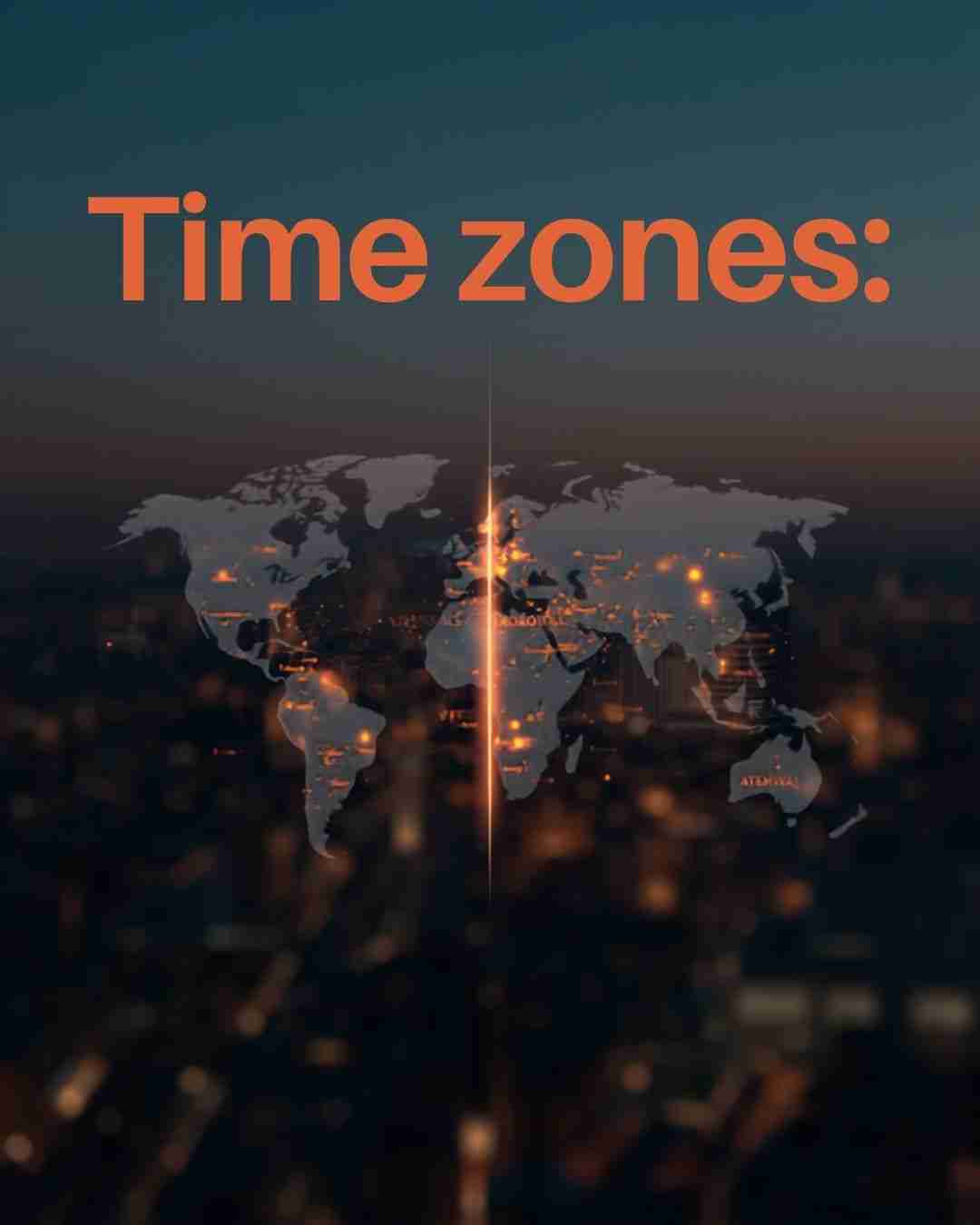
91. The International Date Line is not a straight legal border.
92. It roughly follows 180° longitude but bends around political geography.
93. The International Date Line has no legal international status; countries are free to choose the dates they observe.
94. Crossing it westward generally advances the calendar by one day; crossing it eastward generally moves the date backward by one day.
95. You can therefore arrive somewhere on the “next day” even though the journey did not last 24 hours.
96. Time zones are political conventions as much as geographical ones.
97. Not every time zone differs from UTC by a whole number of hours.
98. Half-hour offsets exist—for example India at UTC+5:30.
99. Quarter-hour offsets also exist, including Nepal at UTC+5:45 and the Chatham Islands at UTC+12:45.
100. Australia has both half-hour and quarter-hour offsets in some areas.
101. Daylight-saving changes can create a temporary difference between places that otherwise share a similar longitude.
102. Time-zone arithmetic can therefore fail if you assume every border crossing changes the clock by exactly one hour.
103. Airlines publish local departure and arrival times, not elapsed travel time in the same time reference.
104. Overnight flights can make the ticket appear to show an arrival date that feels mathematically impossible until time zones are accounted for.
VII. Strange borders and geographic puzzles
105. Countries do not always occupy one continuous block of land.
106. A country can contain an enclave belonging entirely to another country.
107. Switzerland’s official geospatial authority explicitly counts the German enclave of Büsingen and the Italian enclave of Campione d’Italia in describing its borders.
108. Büsingen is legally part of Germany but is surrounded by Switzerland.
109. Despite being German territory, Büsingen is incorporated into the Swiss customs territory under the German-Swiss arrangements.
110. Büsingen can therefore demonstrate the difference between political territory and customs territory in one tiny place.
111. Campione d’Italia is another geographically strange enclave associated with Switzerland, but its customs status changed in 2020, when it entered the EU customs territory.
112. Border geography can therefore affect taxation, customs, postal systems and telephone numbering at the same time.
113. Some enclaves have roads and buildings where an international boundary passes through what appears to be ordinary urban space.
114. Switzerland’s national border is about 1,935 km long and touches five neighboring countries.
115. A country’s political borders can also differ from its customs borders.
116. Political borders, customs borders and visa areas are three different concepts that travelers often incorrectly treat as one.
VIII. Transport: your rights may be better than you think
117. EU air-passenger rights can apply even if you are not an EU citizen.
118. EU air-rights protection can cover flights within the EU, flights departing the EU for non-EU countries, and certain flights arriving in the EU from outside the EU on an EU carrier.
119. Under current EU rules, eligible passengers can receive compensation for qualifying long delays at the final destination.
120. The standard compensation bands include €250, €400 and €600 depending on flight distance and circumstances.
121. A missed connection can still generate compensation when the flights are on a single reservation and the qualifying delay occurs at the final destination.
122. Buying two unrelated tickets for a connection can therefore create a much weaker position than buying a protected itinerary under one booking.
123. Airlines can owe compensation for denied boarding caused by overbooking under the relevant EU passenger-rights rules.
124. These rights are not absolute: “extraordinary circumstances” can affect compensation eligibility.
125. Rail passengers in the EU can generally claim at least 25% of the ticket price for qualifying delays of 60–119 minutes.
126. The minimum compensation generally rises to 50% for delays of 120 minutes or more.
127. EU rail rules can also provide rights to meals and refreshments during sufficiently long delays.
128. In qualifying cases, accommodation can be part of the railway operator’s assistance obligations.
129. If a canceled train operator fails to provide re-routing information within 100 minutes, EU rules can permit passengers to make reasonable alternative public-transport arrangements themselves and seek reimbursement.
130. Passenger-rights claims are often easiest when you keep the booking reference, boarding pass, delay evidence and receipts.
IX. Air-travel details most people learn only after a bad flight
131. Spare lithium batteries and power banks generally belong in carry-on baggage, not checked baggage.
132. IATA advises protecting spare-battery terminals against short circuits.
133. Lithium-ion batteries up to 100 Wh are generally permitted in carry-on baggage, while larger batteries can require airline approval or be prohibited.
134. IATA’s 2026 passenger guidance says airlines are already moving toward stricter power-bank practices, including limits on the number of power banks and restrictions on charging or storage.
135. If your carry-on bag is taken at the gate and placed in the hold, IATA advises removing lithium batteries and battery-powered devices first.
136. Smart luggage with a built-in battery may be unacceptable if the battery cannot be removed.
137. Drone batteries can trigger aviation restrictions even when the drone itself is allowed.
138. Airline rules can be stricter than the baseline international technical rules.
139. “Allowed by airport security” and “accepted by the airline” are not always identical tests.
140. Even a legal item can be subjected to additional screening if security equipment detects something suspicious. TSA explicitly notes that an otherwise permitted item can receive additional screening or be refused based on security concerns.
X. Driving abroad: a license is not the whole story
141. An EU-issued driving licence is generally recognized throughout the EU.
142. An expired licence can become unusable during a trip even if it was valid when you started traveling.
143. Provisional licences are not automatically recognized for driving abroad in the EU.
144. Compulsory third-party motor insurance remains valid when an insured vehicle temporarily travels to another EU country, subject to the applicable framework.
145. Comprehensive cover for theft or damage to your own vehicle depends on the actual insurance contract.
146. A rental-car contract can impose geographic restrictions that are stricter than the country’s immigration rules.
147. Crossing an international border in a rental vehicle can require advance permission from the rental company.
148. A route that looks geographically short can become administratively complicated when it crosses multiple customs territories.
149. Your vehicle can have a different legal status from you at a border—for example, you may be permitted to enter while the vehicle requires additional customs or insurance formalities.
150. Switzerland demonstrates why this matters: its customs territory has special relationships with neighboring enclaves, including Büsingen.
XI. Roaming, phones and the digital traveler
151. EU “Roam Like at Home” does not mean that every country geographically in Europe is automatically covered.
152. The regime is an EU regulatory arrangement, not simply a geographic definition of Europe.
153. Since January 1, 2026, the EU roaming regime has been extended to Ukraine and Moldova.
154. The UK is no longer automatically covered by the EU roaming regime just because it is in Europe.
155. Your home operator may voluntarily offer roaming in countries outside the mandatory regime.
156. “No roaming charge” can still coexist with fair-use policies.
157. An unlocked phone and a roaming agreement are different things.
158. A local SIM or eSIM can change cost and coverage but does not change immigration or identity requirements.
159. Satellite and remote-area communications can behave very differently from terrestrial mobile networks.
160. In remote areas, having an offline map can matter more than having a fast data connection.
XII. Traveling with pets is its own border system
161. Within the EU framework, dogs, cats and ferrets generally need an appropriate identification document such as an EU pet passport.
162. The animal’s microchip must be correctly documented.
163. Rabies vaccination is a central requirement for cross-border travel with these pets.
164. A first rabies vaccination normally requires a waiting period of at least 21 days before travel.
165. The animal generally must be microchipped before the rabies vaccination for the vaccination record to meet the travel requirements.
166. Traveling to certain areas requires additional tapeworm treatment for dogs.
167. Finland, Ireland, Malta, Norway and Northern Ireland are among the destinations with special tapeworm-treatment requirements for dogs.
168. The treatment window is tightly defined—typically between 24 and 120 hours before travel for the relevant journeys.
169. Traveling with more than five pets can move you into a different regulatory category unless a specific exception applies.
170. Entering the EU with a pet from outside the EU may require using a designated travelers’ point of entry where officials can inspect documents and identity.
XIII. The explorer’s final 10: small facts with outsized consequences
171. Keep copies of travel documents separate from the originals.
172. A photograph of your documents on your phone can help with replacement procedures after loss or theft; governments themselves recommend maintaining copies.
173. Keep an emergency copy somewhere offline in case your phone is lost with your passport.
174. Save important addresses and booking details in offline form when traveling somewhere with uncertain connectivity.
175. Know the local emergency number before you need it.
176. Road safety can be a greater travel risk than dramatic but rare criminal incidents; WHO specifically emphasizes road safety in international travel advice.
177. Don’t assume the availability of a familiar medicine at home means an equivalent formulation will exist abroad.
178. Don’t assume the local price of a product reflects its final cost after taxes, tourism fees, exchange-rate spreads or card charges.
179. Don’t assume “European,” “Schengen,” “EU,” “Eurozone,” “EEA,” and “Europe” describe the same group of countries—they do not.
180. The deepest hidden travel fact is that a journey is a chain of jurisdictions, not a single destination.
The 20 facts I’d memorize before a serious international trip
If you don’t want to memorize all 180, these are the ones most likely to save you from a real headache:
1. Check transit requirements, not just destination requirements.
2. Determine whether each connection is airside or landside.
3. Check passport validity against the destination’s actual rule.
4. Check blank-page requirements.
5. Verify visa/ETA/ESTA-style authorization from an official source.
6. Check whether your nationality has special rules.
7. Check whether dual nationality changes entry/exit procedures.
8. Check medicines separately for every country and transit point.
9. Check food, plant and animal-product rules before packing souvenirs.
10. Declare €10,000+ when entering or leaving the EU.
11. Keep important documents copied and offline.
12. Carry essential medication in original packaging.
13. Don’t assume EHIC is travel insurance.
14. Check medical-evacuation coverage for remote travel.
15. Check power-bank rules before flying.
16. Know your air-passenger rights when flying within the EU framework.
17. Know your rail-passenger rights on qualifying EU journeys.
18. Don’t assume Schengen means border controls are impossible.
19. Don’t trust an old blog for a rule that can change annually.
20. Re-check the official sources immediately before departure.
A particularly important 2026 warning: Hidden Travel Facts Every Explorer Needs to Know to Travel Smarter
Travel rules are in an unusually active period of change. EES is already fully operational, ETIAS is approaching launch, the UK’s ETA regime is already being enforced, and Schengen states continue to announce temporary internal border controls.
So an article that was perfectly accurate in 2024 can be materially wrong for a trip in September 2026.
Best sources to check before departure
For the highest-stakes details, prioritize the destination country’s immigration authority/embassy, the relevant EU/Schengen official page, your airline, and IATA Travel Centre/Timatic rather than relying on social-media posts or old travel guides. IATA’s system is specifically designed around passport, visa and health requirements used in airline travel-document checks.
🤍 A Little Creator Recommendation
If you love creating travel content like I do, you'll enjoy Travelpayouts. It's free to join, easy to use, and a lovely way to earn from sharing the adventures you already inspire.
✈️ Join Travelpayouts♡ This is an affiliate link, which means I may earn a small commission at no extra cost to you. Thank you for supporting my journey!
Feature Your Travel Brand
Next to premium hotels, cruise lines, and tour operators, through editorial stories.
Apply for FeatureCategories: Destinations & Journeys • Culinary Travel • Culture & Heritage • Stays & Hospitality • Lifestyle & Fashion
Accepted based on editorial fit & availability.
